Is Hospital Indemnity Insurance Worth It? What to Know | The Benefits Boss

Every open enrollment season, somebody tries to sell you a plan that costs about as much as a streaming subscription and pays you cash if you land in the hospital.
Half the reviews call it a waste of money. The other half swear it saved their family from a five-figure bill. Neither side is lying. They're just answering with different numbers, and that's really the whole story.
Is hospital indemnity insurance worth it? The honest answer isn't a coin flip, and it isn't a shrug either. It comes down to two specific numbers: the size of your deductible, and how much cash you could actually put against it tomorrow morning.
Get those two numbers right and the answer writes itself. We at The Benefits Boss run this exact math for people every week, mostly higher-income professionals and small business owners who picked a leaner plan on purpose and now want to know what should sit underneath it. If that sounds like you, keep reading.

What Is Hospital Indemnity Insurance?
Before you can settle whether this coverage makes sense for your household, you need to know what you're actually buying. It isn't health insurance.
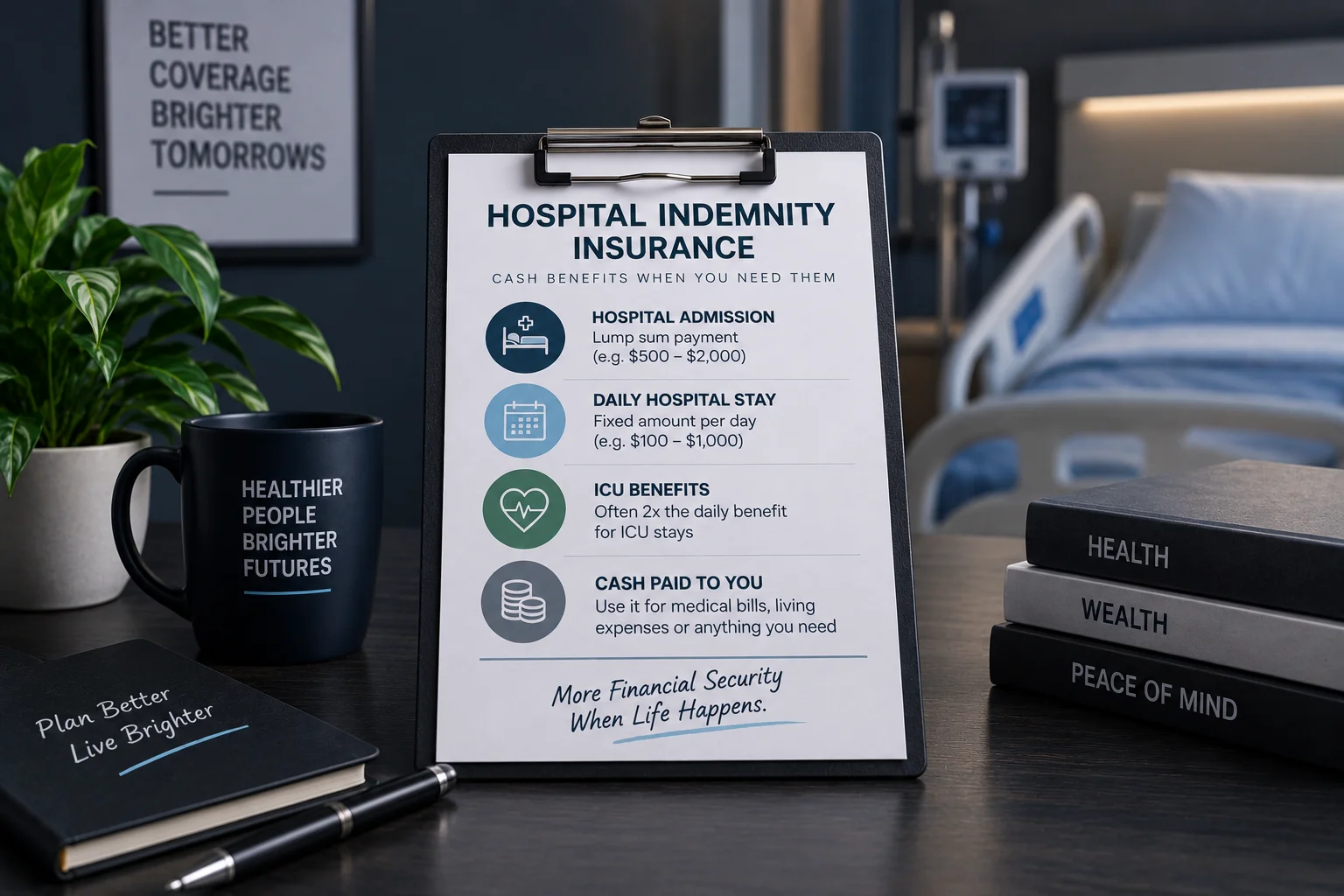
Hospital indemnity insurance is a fixed cash benefit paid directly to you when you're admitted for a covered stay. The payout has nothing to do with what the hospital actually billed. A plan built to pay $1,500 on admission pays $1,500 whether the bill was $8,000 or $80,000.
That flat structure is the entire point. Since the money lands in your account instead of the hospital's, you decide where it goes: the deductible, the electric bill, groceries while you're out of work.
Every policy like this is required to carry a disclosure that it isn't a substitute for ACA-compliant major medical coverage, and that disclosure exists for a reason. This product fills a specific gap major medical leaves open. It doesn't replace major medical, and anyone telling you otherwise is selling you something you shouldn't buy.
How Does Hospital Indemnity Insurance Pay Out?
Not every plan pays the same way, and the differences matter more than the premium on the label.
The real math behind is hospital indemnity insurance worth it for you depends on which benefit types a specific plan actually stacks, not just what it costs per month.
Admission and Daily Benefits
Most plans combine two payments: a lump sum on admission, commonly $500 to $2,000, and a daily benefit for every day you're confined, commonly $100 to $1,000.
Run the numbers on an average case. A plan paying a $1,000 admission benefit plus $200 a day would pay out $1,600 for a stay just over three days, close to the national average length of a hospital admission. That's real money against a deductible a leaner plan leaves exposed.
Most plans also cap the daily benefit at a set number of days per stay, often around 30. That rarely matters for a short admission, but it matters a great deal for a long one.
ICU Benefits and Stay Caps
Intensive care changes the math. Many policies double the daily rate for every ICU day, which is exactly where the cash matters most, since ICU stays run the longest and costliest of any admission.
This is where the per-stay day cap earns its keep. A plan that pays generously for ten days but caps out at day 20 is a very different product than one carrying a 30-day cap, even if the daily rate looks identical on paper.

Is Hospital Indemnity Insurance Worth It With a High-Deductible Private or ACA Plan?
This is the question that actually matters for most people asking it, and it's worth doing the real math instead of settling for "it depends."
Here are the two numbers again: your deductible or out-of-pocket max, and the cash you could comfortably put against that number without touching savings you need elsewhere. For 2026, the ACA sets the individual out-of-pocket cap at $10,600.
If that number would strain your finances, a plan paying real daily cash against it is cheap protection. If your emergency fund already covers it without blinking, you're paying to insure a risk you've already covered yourself.
This is exactly why a lot of higher-income, self-employed professionals and small business owners deliberately choose a leaner private health plan or a higher-deductible ACA marketplace plan to keep the premium down.
They then backfill the exposed deductible with a properly built hospital indemnity policy instead of upgrading to a pricier metal tier. It's often the cheaper move overall, and it's rarely the move a generic quote tool walks you through.
Who Hospital Indemnity Insurance Actually Benefits
Most generic advice on this topic lumps every reader into the same yes-or-no answer. That's lazy, and it's why so much written about this coverage misses the people it would help most.
Self-Employed and 1099 Professionals
If you run your own business, a hospital stay hits you twice. The bill shows up while the invoices stop.
A cash benefit that covers a week of rent or payroll during recovery is doing a job major medical was never designed to do: replacing income, not just paying providers. For a self-employed household, that's often the strongest single argument for carrying this coverage at all.
HSA Holders on High-Deductible Plans
If you fund an HSA, there's a specific rule worth knowing. The IRS generally treats hospital indemnity plans as permitted insurance when they pay a fixed amount per day of hospitalization.
That means it can sit alongside a qualifying high-deductible plan without ending your HSA eligibility. That's the good news. The design of the specific plan you're looking at determines whether that stays true, and that's exactly where things go wrong for people, covered further down.
When Hospital Indemnity Insurance Isn't Worth the Premium
Fairness cuts both ways.
If your plan already caps your hospital exposure at a number your savings can absorb without stress, this coverage mostly duplicates protection you're already paying for. The same goes if you're holding a fully funded emergency fund that already covers your out-of-pocket max. You're self-insured for that risk already, and the premium is better spent elsewhere. Our out-of-pocket cost calculator can show you exactly where that number lands before you decide either way.
And if anyone tries to sell you this coverage as a replacement for real major medical insurance rather than a supplement to it, walk away. A $300-a-day benefit against a serious diagnosis won't touch the actual bill. One bad stay without major medical underneath it can still end in tens of thousands owed.
What to Check Before You Buy a Hospital Indemnity Plan
Two plans priced identically can be worth very different amounts. The differences live in details most people never read past.
HSA Eligibility and Per-Service Riders
Here's where the HSA question from earlier resolves. Riders that pay per medical service, things like outpatient surgery or imaging benefits, rather than a flat amount per day, can end your HSA eligibility even on a plan that otherwise looks compliant.
If you contribute to an HSA, this design detail should outrank the premium when comparing options. Have someone check the actual policy language against IRS rules before you sign anything, not just the brochure.
Waiting Periods and Pre-Existing Exclusions
Timing matters more than most buyers expect. Accident-related stays are typically covered from day one.
Illness benefits commonly carry a waiting period of about 30 days, and childbirth benefits are usually excluded for close to the first year of coverage. If starting a family is part of your plan, the policy needs to be in force well before conception for that waiting period to have already passed.
Pre-existing conditions are typically excluded during that same first year, which makes timing a real strategic decision, not paperwork.

Pairing a Leaner Health Plan With Hospital Indemnity Coverage
Here's the strategy that rarely gets explained out loud: for the right household, the smarter move isn't buying the richer plan out of caution.
It's choosing the leaner plan on purpose, pocketing the premium difference, and backfilling the exposed deductible with a hospital indemnity plan built the right way. A single-carrier agent usually won't walk you through this, because it doesn't upsell you into a bigger premium. A self-service marketplace tool has no reason to suggest it either.
The variables deciding this, deductible size, HSA plan design, family timing, all interact with each other. That's exactly the kind of layered decision worth pricing out across carriers rather than guessing alone.
If you're not sure which plan structure fits your situation in the first place, our quick plan quiz is a fast way to narrow it down before that conversation.
Frequently Asked Questions About Hospital Indemnity Insurance
Is hospital indemnity insurance worth it if I already have good health insurance?
Sometimes. Good major medical still leaves you the deductible and coinsurance to cover on your own, and that's exactly the gap this coverage is built for. If your deductible is already low, the case gets weaker fast.
Does hospital indemnity insurance affect my HSA?
Not if the plan is designed correctly. Fixed per-day benefits are generally fine. Riders that pay per service are the actual risk, so check the policy language before you buy.
What's the actual catch with these plans?
Waiting periods, mostly. Illness benefits often wait around 30 days, pre-existing conditions are typically excluded the first year, and like any insurance, the average buyer pays in more than they collect. You're buying protection against a bad year, not an investment.
Is hospital indemnity insurance worth it for a growing family?
It can be, since childbirth is one of the more predictable hospital admissions there is. The timing has to be right though, since most plans exclude maternity for close to a year after the policy starts.
How much does a typical plan actually pay out?
Most combine a lump sum admission benefit of $500 to $2,000 with a daily rate of $100 to $1,000, often capped around 30 days per stay. The exact numbers depend entirely on the plan you choose.
Get a Personalized Answer From The Benefits Boss
The real answer always comes down to a handful of numbers specific to you: your deductible, your savings, your plan type, and whether an HSA or a pregnancy is part of the picture.
We run that exact comparison against your actual situation, not a generic average, every day. Book a free consult and we'll tell you straight whether the math works in your favor. Carriers pay our fee, not you, so there's no cost to find out either way.
Written by Kyle
Licensed Coverage Advisor at The Benefits Boss